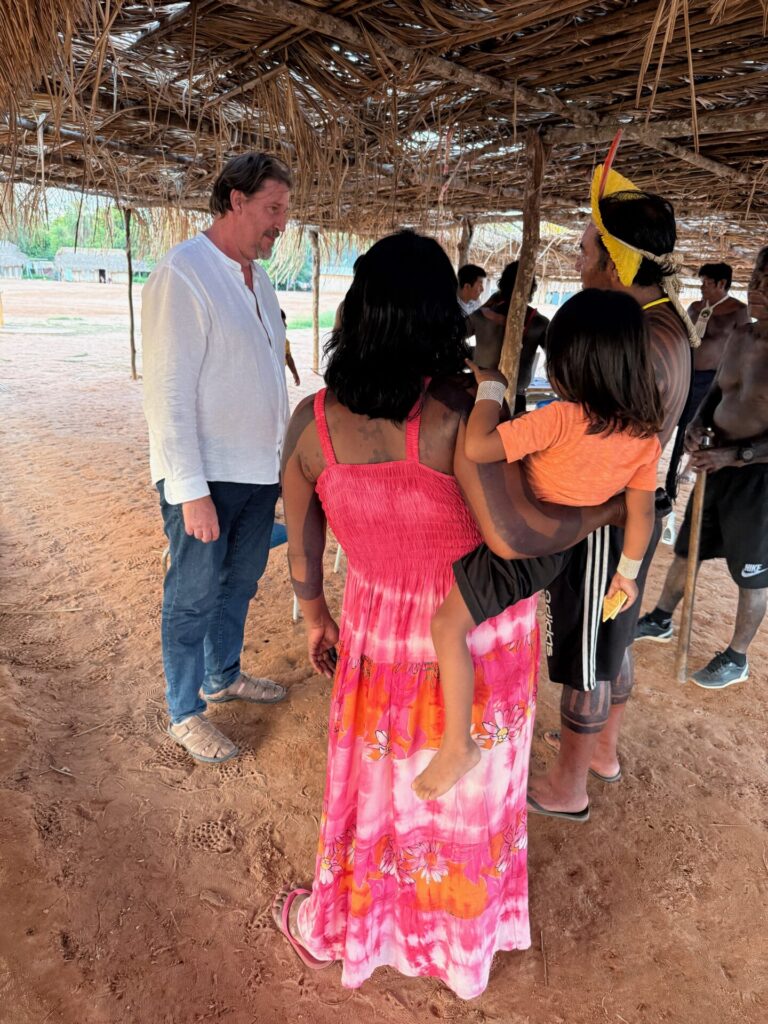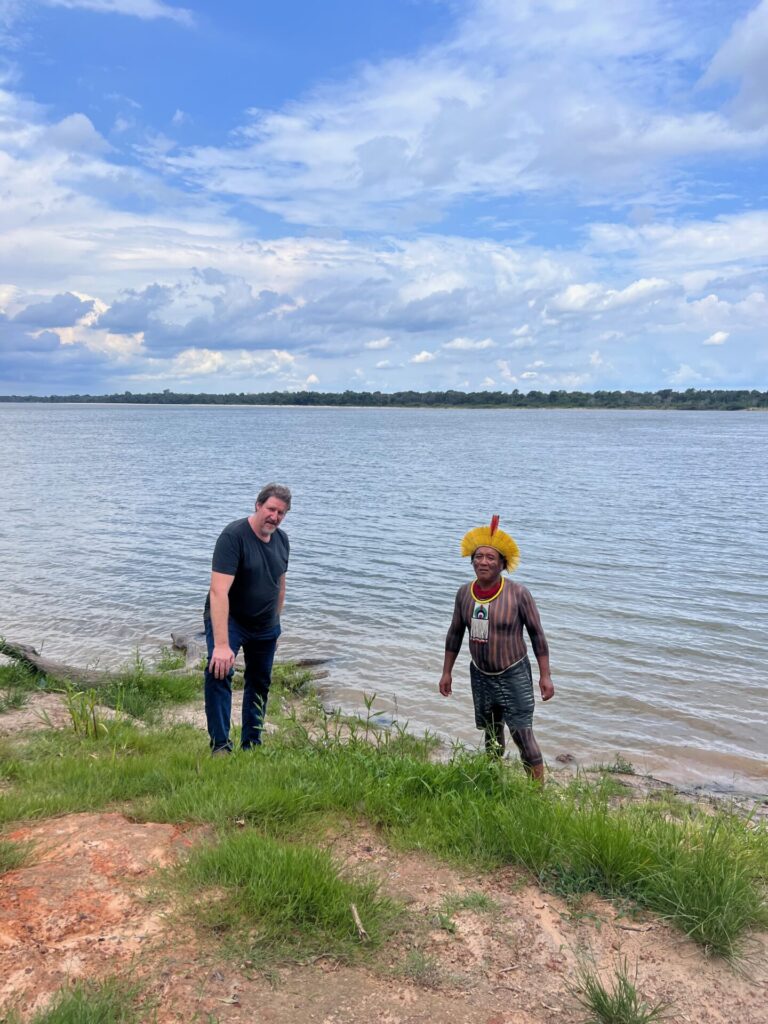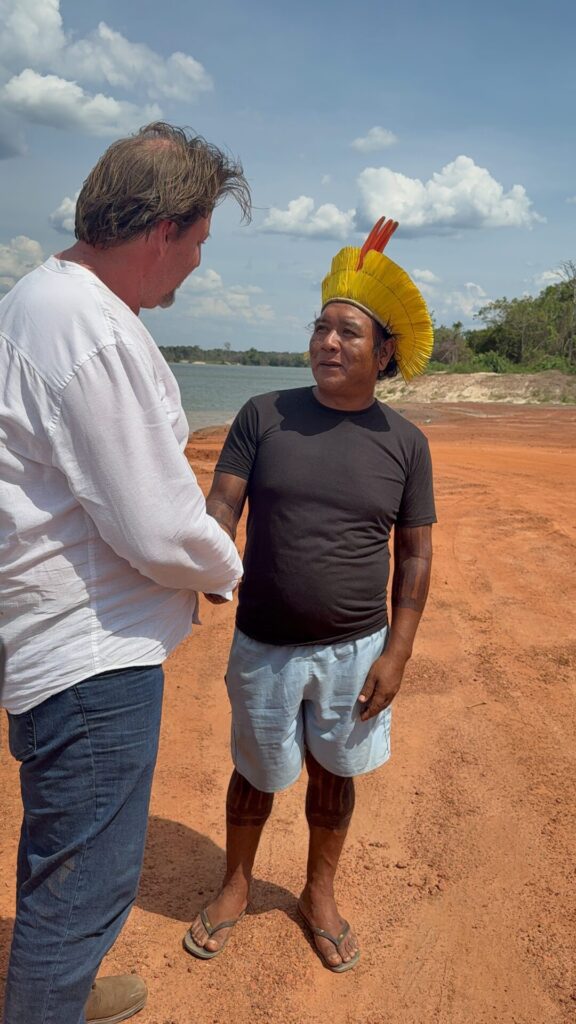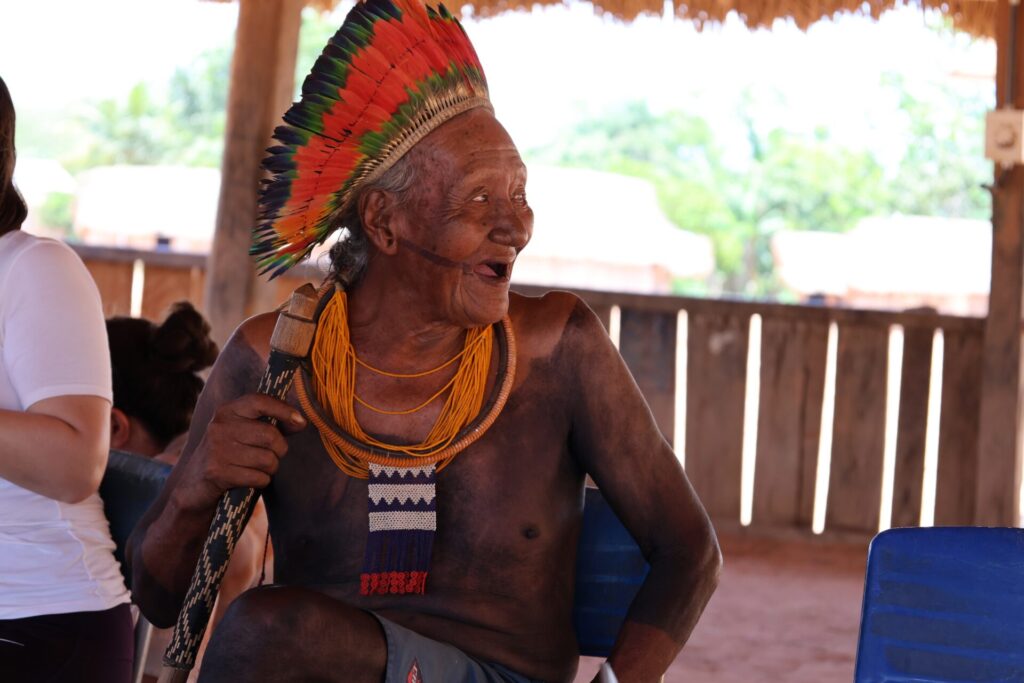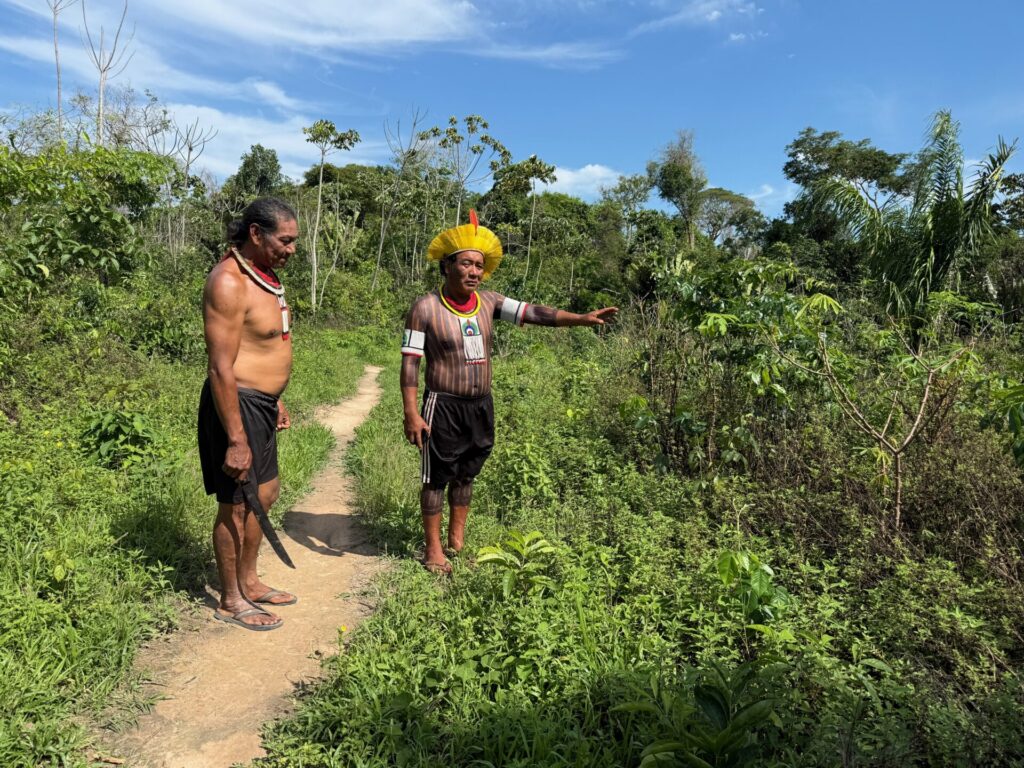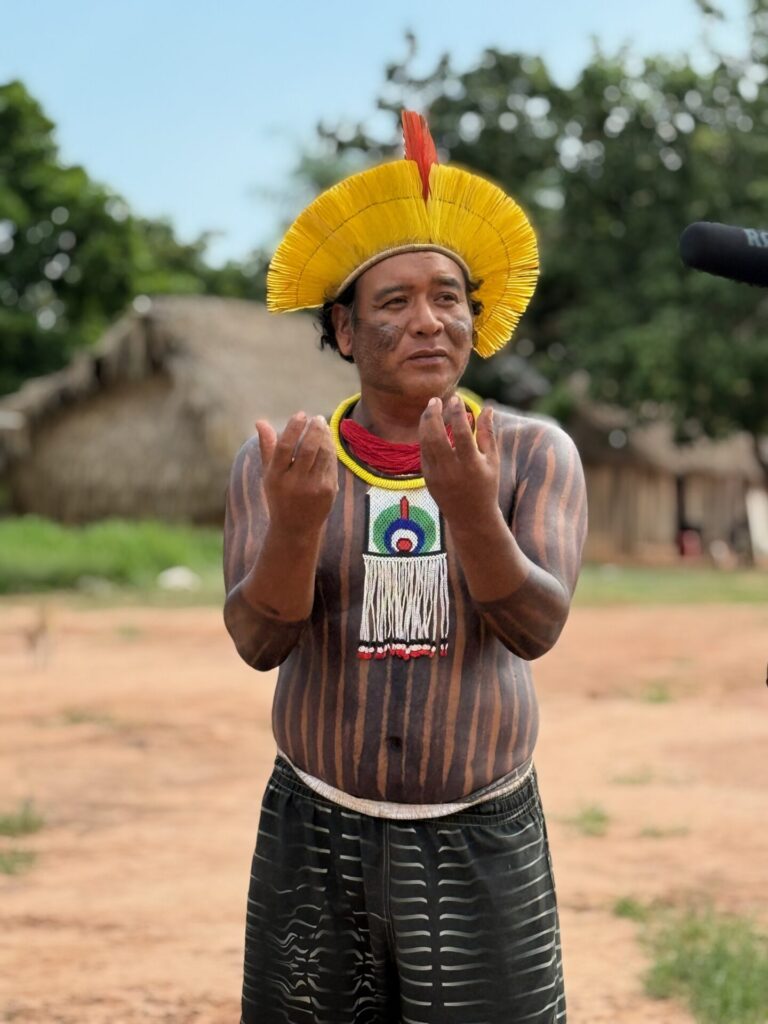
At the end of October, I had the great honour of spending five days in the village of Metuktire in the Brazilian state of Mato Grosso, right in the middle of the Indigenous Kayapó community. This village is the home of Chief Raoni, an icon of Indigenous resistance, and – spoiler ahead – I had the privilege of meeting him in person.
I saw with my own eyes how people defend their home, their forest and their lives with dignity and resilience.
Agriculture, Violence and Systemic Discrimination
The Kayapó opened their doors and their lives to me. My team was hosted in the classrooms of the village school, and I was able to stay in the village’s health centre. Metuktire could be described as a kind of diplomatic village – it has benefited from decades of international work by Chief Raoni, which enabled funding for its health centre, school, solar panels and internet access.
This insight into their daily life was an extraordinary privilege. I was invited not only to see their fields and agricultural work, but also to join their community discussions. My Western mindset was challenged on many levels, but one feeling remained constant: respect.
I have the deepest respect for the way they practice agriculture—not a trace of industrial exploitation, but a way of living in deep connection with the land and in respect for nature. And I respect how they navigate their history as well as their present.
We talked at length about their lived realities:
their right to their own land, seeds and harvests;
forms of agriculture that sustain rather than destroy;
community, lifestyle, responsibility;
and their daily experiences of violence and discrimination.
A teacher from the community described how, in the nearest town, white people often refuse to give Indigenous women the correct change at supermarket checkouts – automatically assuming Indigenous people, especially women, lack financial literacy. Even at the bank counter, when a clerk was caught trying to cheat him, he shrugged and said:
“Oh well, I didn’t know you were a teacher and could do maths.”
Why We in Europe Must Also Protect Indigenous Rights
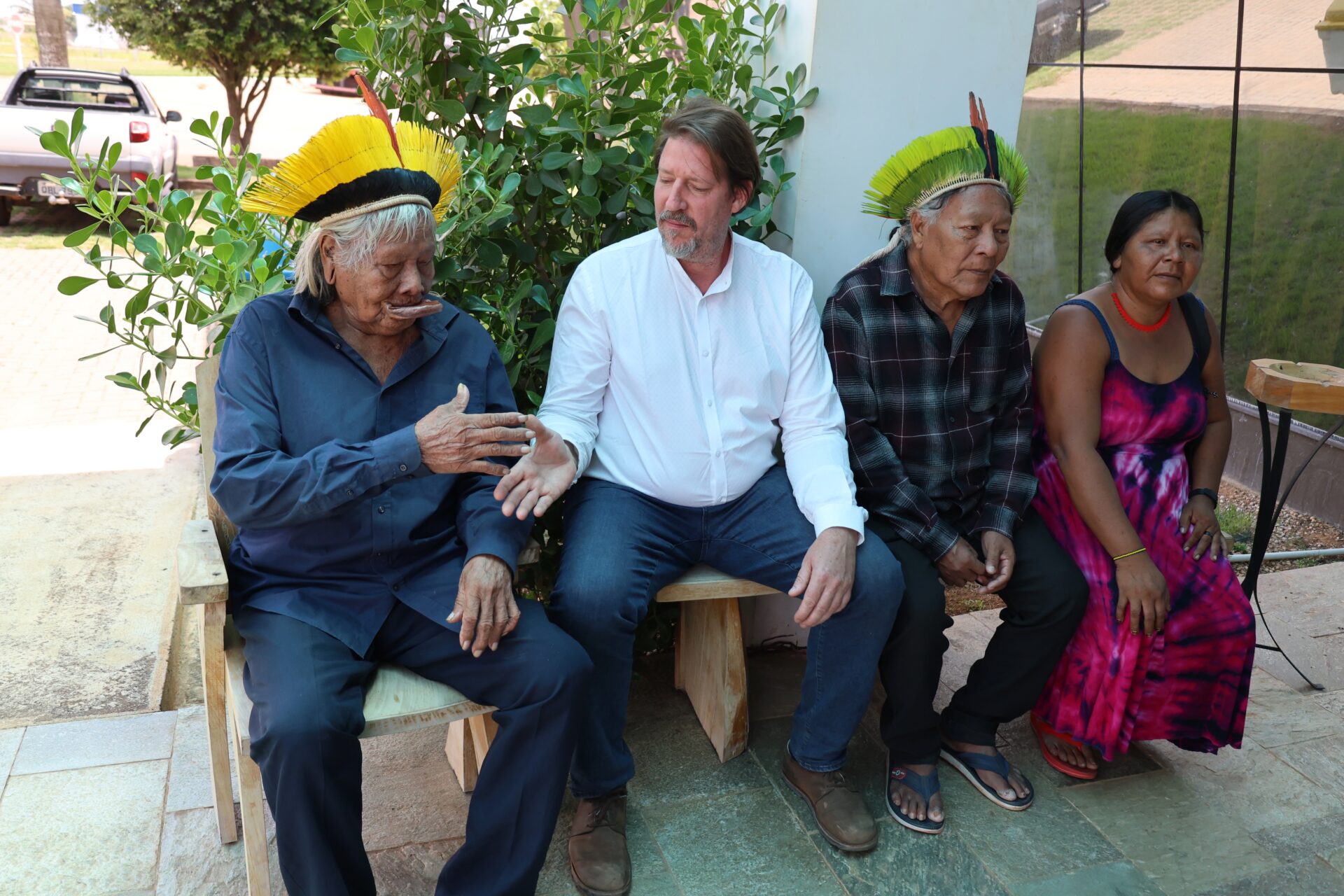
I not only had the opportunity to speak with Chief Raoni himself – alongside Raoni’s grandson Chief Taú, several other Chiefs from neighbouring villages came to join us for an afternoon full of intense discussions.
We spoke about what it truly means to respect Indigenous rights – not as a neocolonial gesture of solidarity, but as an obligation. Their rights are a means of self-protection, and at the same time a protection mechanism for all of us. The Kayapó are the real guardians of the forest. Without the protection of their territories—without their everyday resistance against extraction and agribusiness giants—the climate crisis would already be far worse.
Their message was clear: respect for Indigenous life and culture; respect for territories; respect for the forest.
For me, these demands represent the absolute minimum – but it is up to us to ensure they are upheld.
It is our task to carry their voices far beyond their territories – into our parliaments, our public debates, our policies. Because Indigenous communities do not only protect their forest – they protect the entire planet from a climate collapse with life-threatening consequences.
Pressure From All Sides – Deforestation Still Growing
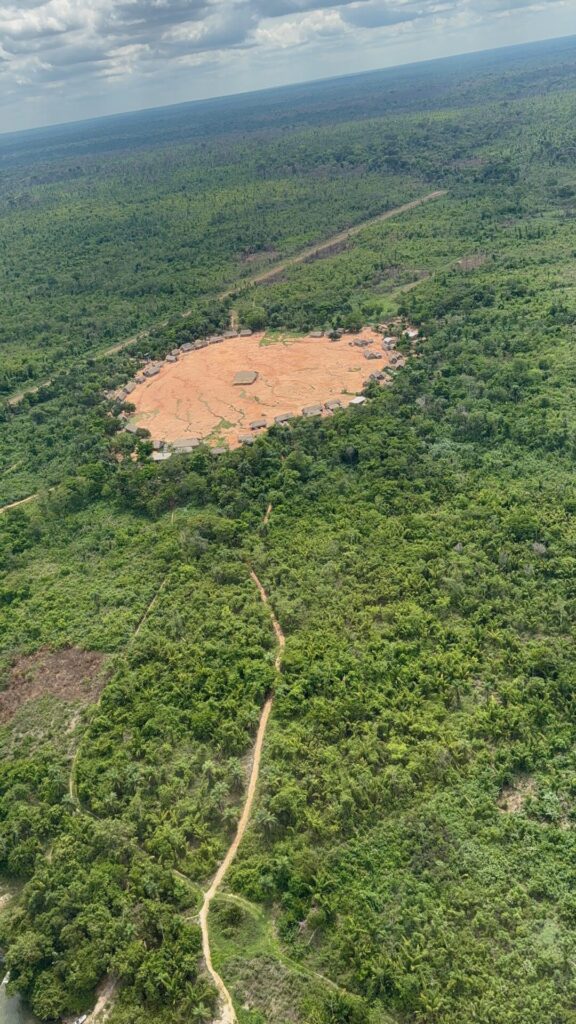
I witnessed firsthand what the pressure on the Amazon looks like: during a roughly one-hour flight over Mato Grosso, we passed massive areas of destruction. Thousands of hectares of clear-cuts around the Indigenous territory—everywhere the forest once stood, fields have taken over. What used to be rainforest is now toxic monoculture.
On the Soy Highway, where I already was two years ago, the fields stretch all the way to the horizon:
no green, no weeds, the air thick with pesticides that burn your eyes and nose.
The EU–Mercosur trade deal threatens to make the situation even worse. The pressure on land and soil, on people and ecosystems, will only intensify under free trade. Small-scale farmers on both sides of the Atlantic cannot compete on the global market, while agribusiness and car manufacturers are already rubbing their hands. Despite decades of criticism, the draft agreement still contains no binding social or environmental protections.
My Hope – and Our Responsibility
The Kayapó and the many Indigenous peoples of the Amazon ask for one thing—and for me, it is nothing less than a political mandate: respect.
Respect for Indigenous life.
Respect for their land.
Respect for the forest.
It is our responsibility—especially here in Europe—to amplify their voices. Not just as a call for help, but as a call for accountability. They fight not only for themselves—they protect the entire planet.
Thanks
My special thanks go to Planète Amazone. They made this connection possible, and without them this journey and these encounters would never have happened. I would also like to thank my trusted interpreter Cristiana Ferraz Coimbra and the Instituto Dialetica. Their work is remarkable—not only bridging languages, but also bridging human understanding.
© for all pictures: Ricarda Pfingstl, Team Waitz