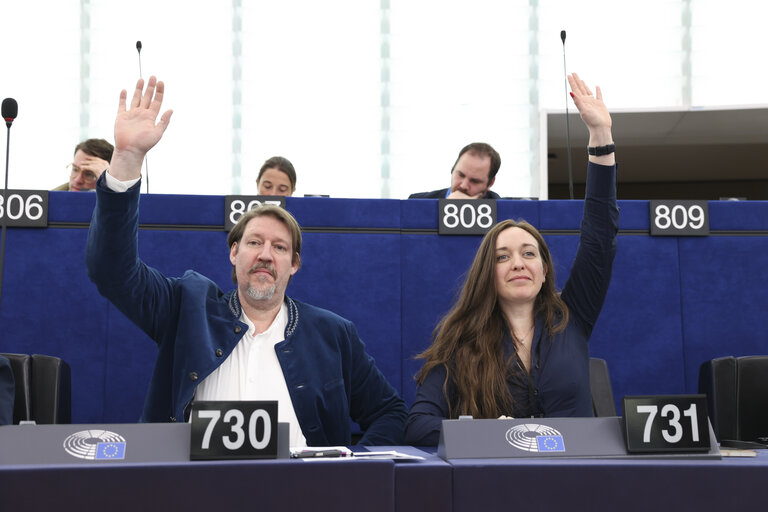
This week, I voted in the European Parliament to refer the EU-Mercosur Agreement to the European Court of Justice for a legal review. As a Member of the European Parliament, I have a duty to ensure that European environmental, social, and climate standards are not weakened. I take this responsibility seriously, which is why I want to clearly explain the reasoning behind this decision.
The EU-Mercosur Agreement is among the most contested trade initiatives the European Union has pursued. Negotiations have stretched over nearly 25 years, marked by repeated pauses, political shifts, and growing opposition from civil society, farmers, and environmental groups across Europe and the Mercosur countries of Argentina, Brazil, Paraguay, Uruguay, and Bolivia.
In December 2024, the European Commission announced that negotiations had concluded. Since then, debate has intensified around a rapid signing and implementation of the agreement. Given today’s geopolitical tensions, these discussions are understandably charged. That makes it all the more important to be clear about what the European Parliament actually voted on, and what it did not.
This Was Not a Vote for or Against Mercosur
To be clear from the outset, the vote in the European Parliament was not a vote on the EU-Mercosur Agreement itself.
It was not about approving or rejecting a strategic partnership with South America. The question was whether the agreement should undergo legal scrutiny before moving forward, specifically by the European Court of Justice.
The reason is straightforward. The European Commission negotiated this agreement with very limited transparency over many years, and key legal questions remain unanswered. Parliament has a responsibility to address these issues before an agreement of this scale is allowed to take effect.
The resolution was tabled by a group of 144 Members of the European Parliament from across the political spectrum, including the conservative EPP, the Social Democrats, the Liberals, the Greens, and the Left. We did not cooperate with far right groups, nor did we support any of their proposals. We explicitly voted against a separate resolution introduced by far right Members of the European Parliament. Find an overview of the votes here: https://mepwatch.eu/10/vote.html?v=183884
The Core Issue: the Rebalancing Mechanism
At the heart of the Greens’ concerns is a new element in the agreement known as the rebalancing mechanism.
This mechanism would allow Mercosur countries to initiate dispute proceedings against the EU if they believe an EU measure significantly undermines their trade benefits, even if that measure does not breach the agreement itself.
What makes this particularly troubling is the extremely broad definition of what counts as a “measure.” In practice, it could cover almost any form of EU law or regulation, including environmental, climate, social, or consumer protection legislation. This explicitly includes the EU Deforestation Regulation and future sustainability laws.
The result is a genuine risk of regulatory chill. Governments may hesitate to adopt ambitious new laws, or dilute them in advance, to avoid potential legal challenges.
This raises a fundamental question. Are we willing to place democratic decision making and high environmental and social standards under indirect pressure?
Since the Commission has failed to provide convincing legal assurances, we believe a review by the European Court of Justice is essential.
Geopolitics Matters, but It Is Not a Blank Check
There is broad agreement that the global geopolitical landscape has shifted dramatically. Authoritarian power blocs are gaining ground, trade is increasingly used as a political tool, and Europe needs strong and reliable international partnerships, including with the Global South.
But geopolitical urgency cannot be an excuse to weaken the rule of law.
An agreement that depends on unresolved legal grey areas is not a solid basis for a long term strategic partnership. Defending Europe’s strength also means safeguarding its ability to pass laws that protect people, the environment, and the climate.
Insufficient Safeguards for Agriculture, the Environment, and Human Rights
Serious shortcomings remain in the substance of the agreement.
Agriculture
The safeguards proposed by the Commission for EU farmers are time limited, slow to take effect, and difficult to enforce in practice, especially for sensitive products such as beef.
Environment and climate
While the Paris Climate Agreement is referenced, it is not legally enforceable. Given ongoing deforestation and the Amazon’s proximity to a tipping point, this is clearly inadequate.
Indigenous and labor rights
The agreement lacks binding protections for Indigenous communities and offers no effective tools to prevent land grabbing, forced labor, or illegal resource extraction. I have witnessed the consequences of this firsthand during my travels in Brazil.
Food and consumer protection
Many pesticides permitted in Mercosur countries are banned in the EU, while the agreement weakens the precautionary principle.
Public services
Opening public procurement risks undermining local value creation and small businesses in Mercosur countries.
The additional instruments proposed by the Commission do not meaningfully address these concerns, as they leave the agreement itself unchanged.
Our Position: Responsibility Over Automatic Approval
Regardless of one’s overall view of the EU-Mercosur Agreement, clarifying these legal risks is in everyone’s interest. That includes European farmers, environmental protection, democratic governance, and a credible trade and foreign policy.
As Members of the European Parliament, our role is not simply to send short term political signals, but to prevent long term harm. That is why we voted as we did.
A strong Europe needs both. Strategic partnerships, and the resolve to defend its own values